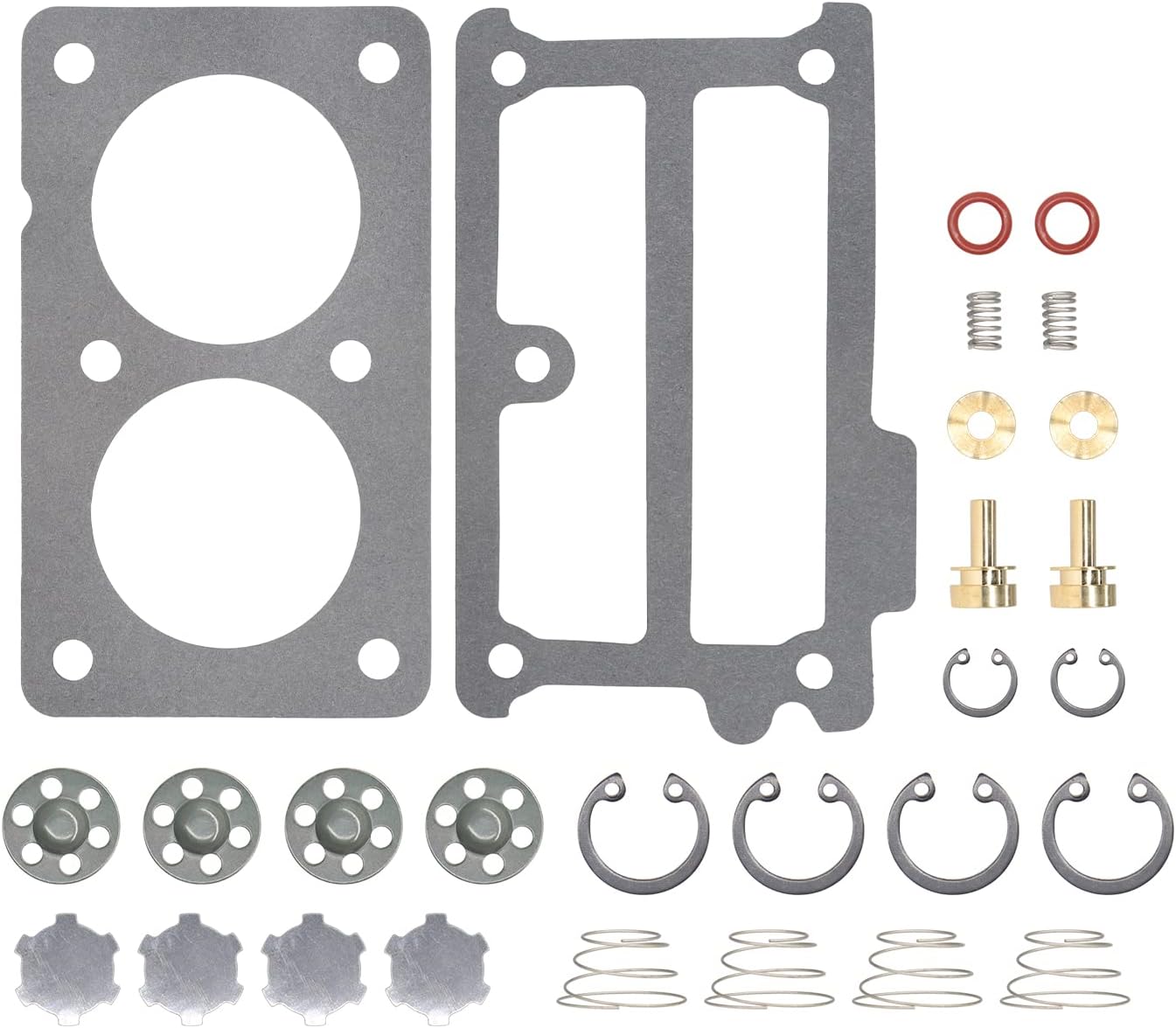
DeWalt DCF885/886/887 Chuck Spring & Ball Kit (2-Pack)
£3.90 on Amazon.co.uk (as of 2 November 2026) View details ↗
This replacement kit provides direct compatibility with DeWalt impact driver models DCF885, DCF886, and DCF887, including variants such as DC825B (Types 3/4), DC827KL (Type 3), and DCF886B (Types 1–6). The set includes two precision-engineered metal springs and two hardened steel balls, designed to maintain secure bit retention during high-torque applications. It replaces part numbers N078434 and N089668, ensuring the chuck’s locking mechanism functions as intended.
The components are constructed from durable metal, with the spring applying consistent pressure to hold screw bits firmly in place while the steel ball engages with the chuck’s internal locking system. This design prevents unintended bit dislodgement during operation, supporting reliable performance in power tool repair scenarios. The kit is intended for straightforward installation into the existing bit holder assembly, requiring no special tools—simply insert the parts into the housing following the original equipment layout.
Note that the real colour of the item may vary slightly from images due to monitor or lighting conditions, and minor measurement deviations may occur during manual handling. For optimal results, verify compatibility with your specific model variant before use.
| Material | Metal (spring and hardened steel ball) |
|---|---|
| Part numbers | N078434, N089668 |
| Compatible models | DCF885, DCF886, DCF887 (including DC825B, DC886B, DCF815, and others) |
| Quantity included | 2 springs + 2 steel balls |
| Product dimensions | 3 × 1.98 × 0.99 cm |
| Item weight | 10 g |